One More Spin: The Hidden Psychology Draining Aussie Players' Wallets
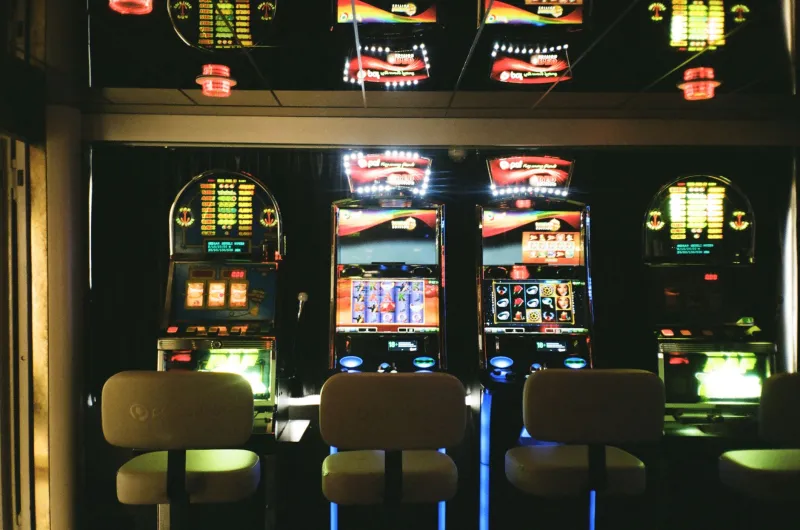
Let's be straight with you: the biggest threat to your bankroll isn't a cold streak or a rigged deck. It's your own brain. More specifically, it's the gap between what your brain thinks is happening and what's actually going on behind the screen. Australian players collectively drop billions every year chasing wins that feel perpetually just out of reach — and that's not an accident.
This isn't a lecture. It's a breakdown of the mechanics designed to keep you spinning longer than you planned, and more importantly, what you can do to push back.
The Near-Miss: Gaming's Cruelest Trick
Picture this: two jackpot symbols land perfectly, and the third stops just one position short. Your pulse spikes. You feel like you almost had it. That feeling? Completely manufactured.
Research from Monash University and international gambling studies consistently shows that near-misses trigger the same neural reward pathways as actual wins. Your brain processes a near-miss not as a loss, but as a signal that success is close — that the next spin might be the one. Game designers know this. They engineer near-miss outcomes into reel mechanics at a frequency far higher than pure probability would produce.
In regulated markets, there are rules around this, but the psychological impact remains potent even within legal parameters. The next time two symbols line up and the third teases you, remind yourself: that outcome was statistically no more meaningful than landing three completely different symbols. The feeling is a design feature, not a sign.
The Dopamine Loop and How Pokies Exploit It
Modern pokies — whether you're playing at a venue in Melbourne's CBD or spinning on your phone from the couch — are built around variable reward schedules. This is the same psychological mechanism behind social media notifications and poker machines alike.
Unlike a fixed reward (you do X, you get Y), variable rewards are unpredictable. And unpredictability, counterintuitively, is more compelling to the human brain, not less. Psychologist B.F. Skinner demonstrated this with pigeons back in the 1950s, and slot designers have been applying the same principle ever since.
When you win, even a small amount, your brain releases dopamine. When you almost win, dopamine is also released in anticipation. When you lose, the craving for that next dopamine hit intensifies. The machine doesn't need to pay you often — it just needs to keep you in the loop long enough for the losses to accumulate quietly.
The Jackpot Illusion: Why Chasing the Big One Doesn't Add Up
Progressive jackpots are the crown jewel of casino marketing. They flash enormous numbers, sometimes in the millions, and they're impossible to ignore. For Aussie players, the fantasy of a life-changing spin is a powerful pull.
Here's the uncomfortable maths: the house edge on progressive jackpot slots is typically higher than on standard games, because a portion of every bet feeds the jackpot pool. Your expected return per dollar is lower, not higher. The jackpot is real — someone eventually wins it — but the odds are structured so that the average player will spend far more chasing it than they could ever reasonably expect to recoup.
This doesn't mean you can never play progressives. It means understanding what you're actually buying: a small chance at a massive outcome, funded by a worse expected return on every spin. If that's your entertainment budget for the evening, go in with eyes open. If you're treating it as a strategy, rethink.
'Just Getting Even': The Trap That Costs the Most
There's a specific flavour of session that every experienced player recognises: you're down, and rather than walking away, you start playing to recover your losses. The goal shifts from entertainment to recoupment. This is where the real damage happens.
Behavioural economists call this loss aversion — the psychological pain of losing is roughly twice as powerful as the pleasure of an equivalent win. This asymmetry drives players to take increasingly irrational risks to avoid locking in a loss. Casinos don't need to do anything extra here; the architecture of the human brain does the work for them.
The practical fix is mechanical and boring, but it works: set a loss limit before you start playing, not during. Write it down if you need to. When you hit it, the session is over — not paused, not renegotiated. Over.
Practical Tools to Play Smarter
Recognising the traps is step one. Here's what actually helps:
Session timers and deposit limits. Reputable Australian-licensed platforms are required to offer responsible gambling tools including deposit limits, session reminders, and self-exclusion options. Use them proactively, not reactively.
The pre-commitment strategy. Decide your budget and your win target before you log in. If you hit either number — whether you're up or down — close the session. This removes in-the-moment decision-making, which is where psychology beats you.
Take the bonuses seriously — but read the terms. Wagering requirements on bonuses exist for a reason. A $200 bonus with a 40x wagering requirement means you need to bet $8,000 before withdrawing. That's not free money; it's a mechanism to keep you playing.
Switch games deliberately. If you've been on the same slot for an extended period, the familiarity itself becomes a trap. The near-misses feel more significant because you've been watching the patterns. Changing games resets that psychological attachment.
The Bottom Line
King Billy's philosophy has always been simple: play to enjoy, not to chase. The games are designed to be entertaining, and they can be — but only when you're the one setting the terms, not the algorithm. Understanding how the psychology works doesn't ruin the fun. It gives you the upper hand.
The house always has an edge. But a player who understands their own psychology has something the house can't fully account for: the ability to walk away.